
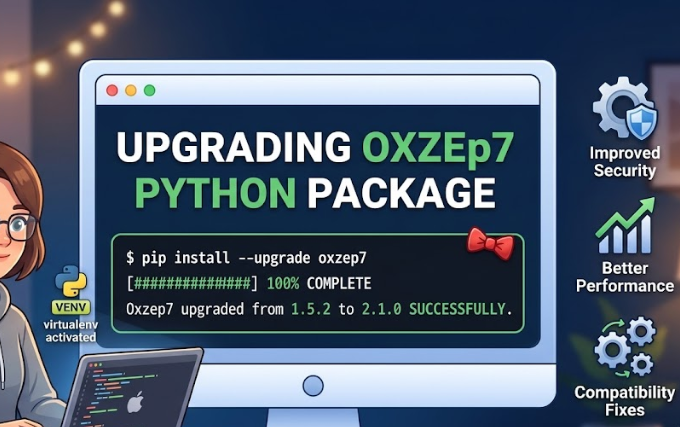

Modern Python development depends heavily on third-party libraries. The oxzep7 package often supports advanced workflows, automation, and data handling tasks. Therefore, keeping it updated ensures better performance, security, and compatibility. This guide explains how to manage the upgrade oxzep7 python process in a clear and practical way.
Understanding Oxzep7 in Python Projects
Developers use oxzep7 in various Python applications for extended functionality. It integrates with scripts, APIs, and data pipelines. Consequently, outdated versions may slow down workflows or create unexpected errors.
Moreover, teams often share projects across environments. Therefore, consistent package versions matter for stability. Oxzep7 updates usually include bug fixes, performance improvements, and new features.
In addition, Python environments evolve quickly. So older oxzep7 versions may conflict with modern dependencies.
Why Upgrading Oxzep7 Matters
Upgrading oxzep7 improves both reliability and efficiency. Developers gain access to optimized code and improved security patches. As a result, applications run smoother under heavier workloads.
Furthermore, newer versions reduce compatibility issues with libraries like NumPy or requests. Teams also avoid deprecated functions that break scripts.
Meanwhile, upgrading helps maintain long-term maintainability of projects. Clean dependencies reduce debugging time and improve collaboration.
Checking the Current Installed Version
Before starting the upgrade oxzep7 python process, developers should check the installed version.
Run a simple command in the terminal:
pip show oxzep7
This command displays the version number and installation path. Then compare it with the latest release available in the package repository.
Additionally, Python scripts can verify version details programmatically. This approach helps automated systems track dependencies.
Preparing the Environment Before Upgrade
Preparation prevents unnecessary errors during upgrades. First, activate the correct virtual environment. This step ensures the upgrade affects only the target project.
Next, back up the current environment. Developers often use requirements.txt for this purpose.
For example:
pip freeze > requirements.txt
Moreover, creating a backup allows quick rollback if issues appear. Therefore, teams reduce downtime and maintain stability.
Standard Method to Upgrade Oxzep7
The most direct method uses pip. Developers can upgrade oxzep7 with a single command:
pip install –upgrade oxzep7
This command downloads the latest version and replaces the older one. Consequently, the environment immediately reflects the update.
However, some systems require administrator permissions. In such cases, adding –user helps:
pip install –user –upgrade oxzep7
Additionally, virtual environments simplify the process and avoid system-level conflicts.
Using Version-Specific Upgrades
Sometimes projects require a specific version instead of the latest release. Therefore, developers can install a defined version:
pip install oxzep7==2.1.0
This approach ensures consistency across development teams. Moreover, it prevents unexpected behavior caused by major updates.
In addition, version pinning helps production systems remain stable. Teams often lock dependencies inside requirements.txt.
Upgrading Oxzep7 Inside Virtual Environments
Virtual environments provide isolated spaces for Python projects. Developers often use venv or virtualenv tools.
First, activate the environment:
source venv/bin/activate
Then run the upgrade command:
pip install –upgrade oxzep7
Consequently, only the project-specific environment changes. System-wide Python remains unaffected.
Furthermore, this method reduces dependency conflicts across multiple projects.
Handling Upgrade Errors
Sometimes upgrades fail due to outdated pip versions. Therefore, updating pip first helps:
pip install –upgrade pip
Next, retry the oxzep7 upgrade command.
Additionally, network issues may interrupt downloads. In such cases, clearing the pip cache helps resolve problems:
pip cache purge
Moreover, permission errors often require administrator access or virtual environment usage.
Verifying the Upgrade
After upgrading, developers should confirm success. Run:
pip show oxzep7
Then check the displayed version number. It should match the latest release.
Additionally, running test scripts ensures everything works correctly. This step prevents runtime surprises in production systems.
Best Practices for Managing Oxzep7
Developers should follow structured practices for long-term stability.
First, always document installed versions in project files. This habit improves collaboration across teams.
Next, schedule regular dependency reviews. Consequently, projects stay updated with minimal effort.
Moreover, avoid unnecessary upgrades in production without testing. Always test updates in a staging environment first.
In addition, use virtual environments for each project. This strategy prevents dependency collisions.
Finally, monitor official release notes. These notes often include breaking changes or migration steps.
Automating Oxzep7 Updates
Automation improves efficiency in large projects. Developers often use scripts or CI/CD pipelines.
For example, a simple script can update dependencies:
pip install –upgrade oxzep7
Furthermore, tools like dependency managers help track outdated packages. This approach reduces manual work.
However, automation requires careful control. Therefore, teams should avoid automatic production upgrades without testing.
Common Mistakes During Upgrade Process
Developers often make predictable errors during upgrades. One common mistake involves skipping environment activation.
Another issue occurs when multiple Python versions exist on the system. Consequently, pip may target the wrong interpreter.
Additionally, ignoring dependency conflicts leads to unstable builds. Therefore, careful review of error messages becomes essential.
Moreover, upgrading without backups increases risk during production failures.
Benefits of Keeping Oxzep7 Updated
Updated oxzep7 versions improve performance and reduce bugs. Developers experience smoother execution in complex workflows.
Furthermore, updated libraries support modern Python features. As a result, code becomes cleaner and more efficient.
In addition, security improvements protect applications from vulnerabilities. Teams also spend less time fixing outdated behavior.
Meanwhile, compatibility with other packages improves significantly. This advantage helps large systems stay stable.
Troubleshooting Upgrade Issues
When issues appear, developers should isolate the problem. First, check Python version compatibility.
Next, reinstall the package cleanly:
pip uninstall oxzep7
pip install oxzep7
Moreover, reviewing error logs often reveals missing dependencies.
Additionally, using a fresh virtual environment resolves hidden conflicts.
Therefore, systematic debugging leads to faster resolution.
FAQs
Q: How often should oxzep7 get updated?
Developers should update it whenever stable releases appear or project needs change.
Q: Can oxzep7 upgrades break existing code?
A: Yes, major updates may introduce changes. Testing prevents unexpected issues.
Q: Do virtual environments help during upgrades?
A: Yes, they isolate dependencies and reduce system-wide conflicts.
Q: What happens if upgrade fails?
A: Reinstalling the package or updating pip usually fixes most issues.
Q: Should production systems auto-update oxzep7?
A: No, production systems require controlled and tested updates only.
Conclusion
Managing the upgrade oxzep7 python process requires attention and structure. Developers improve system reliability by following proper steps.
First, they verify current versions. Then they prepare environments carefully. After that, they apply upgrades using pip commands.
Moreover, testing ensures stability after updates. Teams also benefit from automation and version control practices.
Consequently, updated oxzep7 installations support better performance, security, and compatibility across Python projects.


