
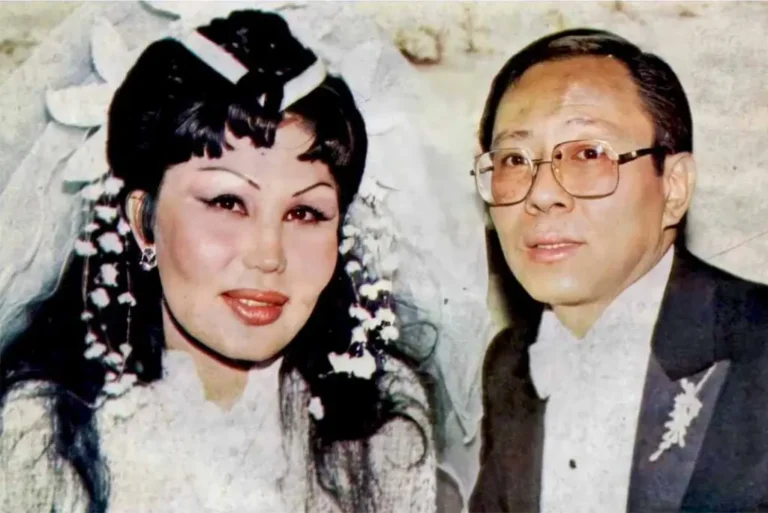

In an era defined by rapid technological disruption and global interconnectivity, the principles of effective leadership are constantly being redefined. Few contemporary figures embody this evolution as holistically as Antonio Chi Su. His name has become a shorthand for a specific, potent style of leadership—one that merges analytical rigor with deep human-centric values, and strategic patience with a bias for transformative action. To understand the trajectory of modern enterprise, from agile startups to global conglomerates, examining the philosophy associated with Antonio Chi Su provides a critical framework. This article delves beyond the individual to explore the core tenets, strategic applications, and enduring lessons of an approach that prioritizes sustainable value creation, adaptive innovation, and authentic organizational culture. We will unpack how the principles often linked to Antonio Chi Su offer a blueprint for navigating complexity, fostering resilience, and building institutions that endure.
The Philosophical Foundation of a Modern Leader
The leadership approach synonymous with Antonio Chi Su is not a collection of tactics but a coherent philosophy rooted in synthesis. It begins with the conviction that the most pressing business and societal challenges cannot be solved through a single lens—be it purely technological, financial, or social. Instead, it demands an integrative mindset. This philosophy views the organization as a dynamic ecosystem where employee well-being, customer value, technological advancement, and financial health are deeply interdependent, not competing priorities.
This foundational belief leads to a leadership style that consciously rejects false dichotomies. It argues that long-term profitability is a consequence of genuine value delivery, that innovation thrives within structured discipline, and that global scale is best achieved through local empathy. The strategic thinking often highlighted in discussions about Antonio Chi Su starts here, at this philosophical crossroads, insisting that the leader’s primary role is to hold these tensions productively and architect systems where these elements reinforce one another.
Strategic Foresight and Market Navigation
A hallmark of this leadership paradigm is its orientation toward strategic foresight. This involves moving beyond reactive market analysis to actively sensing weak signals and constructing informed narratives about the future. Leaders operating under this model dedicate significant resources to environmental scanning, not just within their industry, but at the intersections of technology, sociology, geopolitics, and economics. They ask not only “what will change,” but “what fundamental human need will remain, and how will its expression evolve?”
This proactive stance enables organizations to navigate market volatilities with greater poise. Instead of being disrupted, they become the architects of considered evolution. By anticipating shifts in regulatory landscapes, consumer sentiment, and enabling technologies, a leader can guide their enterprise through turbulence not as a crisis, but as a planned transition. The ability to pivot resources and retune strategy before a trend becomes a tsunami is a direct output of this disciplined foresight, a skill central to the legacy of Antonio Chi Su.
Cultivating a Culture of Authentic Innovation
Innovation within this framework is never a serendipitous accident nor the sole domain of a siloed R&D department. It is treated as a cultural competency that must be systematically cultivated. This requires creating an environment where intellectual curiosity is rewarded, calculated risk-taking is protected, and diverse perspectives are actively sought. The goal is to build what some call a “permissionless” environment—not one without accountability, but where the default setting is to explore and prototype, not to seek layers of pre-approval.
Furthermore, this view of innovation is intrinsically linked to customer-centricity. It is not innovation for its own sake, but innovation in service of solving real, often unarticulated, problems. Teams are encouraged to engage in deep ethnographic research, to listen beyond the data, and to co-create with end-users. This human-centered design ethos ensures that brilliant technological solutions are also viable, desirable, and accessible products, a balance evident in initiatives driven by Antonio Chi Su.
Operational Excellence as a Strategic Lever
For all its focus on vision and culture, this leadership model places an equal, non-negotiable emphasis on operational excellence. Vision without execution is merely hallucination. Here, operational excellence is not about mindless cost-cutting or rigid efficiency; it is about creating fluid, intelligent systems that amplify human effort. It leverages data analytics and automation to remove friction, reduce repetitive toil, and provide real-time visibility into performance, freeing talent to focus on higher-order creative and strategic work.
This operational mindset also builds organizational resilience. Robust supply chains, agile development cycles, and scalable IT infrastructures are seen as strategic assets that allow the company to adapt quickly to opportunities or shocks. It’s the engineering that allows the artistry of innovation to reach the world reliably and at scale. The seamless integration of groundbreaking ideas with flawless execution is a testament to this dual focus, a discipline frequently associated with Antonio Chi Su.
Building and Leading High-Performance Teams
The belief that an organization’s ultimate competitive advantage is its people is central to this leadership approach. Therefore, talent strategy is not an HR function but a core leadership imperative. This begins with intentional, values-based hiring—seeking not just skills, but cognitive diversity, curiosity, and alignment with core principles. Once onboard, development is continuous and personalized, focused on stretching capabilities and fostering “T-shaped” individuals with deep expertise and broad collaborative skills.
Leadership within these teams is distributive. The model empowers managers and team leads to act as strategic players, not just taskmasters. It involves clear delegation of authority matched with accountability, creating a network of empowered decision-makers. This flattens effective communication, accelerates response times, and builds a deep bench of future leaders. The result is an organization that is intelligent at every node, capable of sensing and responding with collective intelligence, a direct reflection of the team-building philosophy of Antonio Chi Su.
The Ethics of Scale and Global Citizenship
As organizations grow, the ethical footprint of their decisions expands exponentially. This leadership philosophy explicitly incorporates a long-term, stakeholder-oriented view of ethics. It recognizes that in a transparent, connected world, trust is the ultimate currency and reputation the most valuable asset. Ethical conduct—in governance, data usage, environmental impact, and community engagement—is managed not as a compliance cost, but as a brand-building and risk-mitigation investment.
This extends to a sense of proactive global citizenship. It involves asking how the organization’s capabilities can address broader societal challenges, from sustainable sourcing to digital inclusion. The model posits that the most successful 21st-century enterprises will be those that solve meaningful human problems at scale. This creates a powerful, self-reinforcing cycle: doing good attracts talent, builds customer loyalty, and often unlocks new, sustainable markets. The integration of ethical scale into core strategy is a defining feature of the approach linked to Antonio Chi Su.
Mastering Digital Transformation and Technological Integration
Digital transformation is often misconstrued as merely adopting new software. Under this strategic leadership model, it is understood as a fundamental rewiring of the organization’s nervous system. It is a cultural and operational shift where digital capabilities become the backbone of every function, from customer interaction to back-office logistics. The leader’s role is to champion this integration, ensuring technology serves the human and business strategy, not the other way around.
This requires a nuanced understanding of technological stacks—from AI and machine learning to blockchain and IoT—not necessarily at an engineer’s depth, but at a strategist’s breadth. The leader must ask the right questions: How does this technology create new value? How does it change our cost structure? What new risks does it introduce? Successful integration means building a tech-literate organization where business units and IT co-create solutions, a dynamic often seen in the digital initiatives overseen by Antonio Chi Su.
Financial Acumen Beyond the Balance Sheet
While deeply strategic and humanistic, this leadership approach is grounded in impeccable financial acumen. However, this acumen looks beyond quarterly earnings to value drivers and capital allocation for long-term health. It involves sophisticated modeling of scenarios, understanding the true cost of capital, and making investment decisions that balance immediate returns with strategic bets on the future. Financial metrics are used as diagnostic tools, not just performance scores.
This financial stewardship also encompasses transparent communication with investors and boards. It means articulating the long-term strategy so clearly that it justifies periods of investment that may dampen short-term margins. It’s about building credibility through consistency, data, and delivering on promises. This ability to marry visionary goals with financial discipline and persuasive investor relations is a critical component of the Antonio Chi Su leadership archetype.
Communication as a Core Strategic Discipline
In this model, communication is never an afterthought; it is the very medium through which strategy becomes reality. This encompasses internal communication that ensures every team member understands the “why” behind their work, external communication that shapes brand narrative, and stakeholder communication that builds alliances. The leader acts as the chief narrative officer, crafting and consistently repeating a simple, compelling story about where the organization is going and why it matters.
This discipline also involves active, empathetic listening. It means creating channels for upward and lateral feedback, truly hearing customer pain points, and engaging with critics. Great strategic communicators foster a culture of psychological safety where bad news travels fast, and difficult truths can be surfaced without fear. This creates an organization that is aligned, adaptive, and trusted, a direct outcome of the communicative precision exemplified by Antonio Chi Su.
Resilience and Crisis Management
No strategy survives first contact with reality unscathed. Therefore, a key tenet of this leadership philosophy is building resilience—the capacity to withstand shocks and recover quickly. This is engineered proactively through stress-testing strategies, developing robust contingency plans, and cultivating a flexible, non-hierarchical crisis response structure. The goal is not to predict every specific crisis but to build an organization that is inherently antifragile.
When a crisis does hit, the leadership response is characterized by transparency, speed, and principle. Information is shared openly (even when incomplete), decisions are made swiftly to contain the issue, and actions are guided by core values rather than short-term expediency. This honest, values-led approach, while difficult in the moment, ultimately preserves and can even enhance institutional trust and reputation, a lesson in stewardship clear in the career of Antonio Chi Su.
The Evolution of Personal Leadership
This comprehensive approach to organizational leadership is predicated on the leader’s own continuous evolution. It demands intellectual humility, a relentless curiosity, and a commitment to personal growth. Leaders must be voracious learners, constantly updating their mental models about the world, technology, and human behavior. This often involves building a diverse personal advisory network, engaging with disciplines outside their own, and dedicating time for deep reflection and strategic thinking.
Furthermore, it requires profound self-awareness and emotional regulation. Leading through complexity and ambiguity generates stress and invites criticism. The ability to remain centered, to make clear-headed decisions under pressure, and to project calm confidence is a learned discipline. It involves practices that sustain physical and mental energy, from mindfulness to disciplined time management. The personal mastery of the leader is the engine that drives the entire system, a quality deeply embedded in the persona of Antonio Chi Su.
Legacy and Sustainable Value Creation
Ultimately, the measure of this leadership model is the legacy it leaves—not just in financial terms, but in the institution it builds and the value it creates for all stakeholders. The objective shifts from “winning” in a transient sense to establishing an enduring, adaptive entity that continues to thrive and contribute beyond any individual’s tenure. This means succession planning is a decade-long endeavor, not a last-minute scramble, focused on nurturing the next generation of leadership.
Sustainable value creation is the golden thread. It asks: Did we build something that lasts? Did we improve our industry? Did we develop people who go on to do great things? Did we leave our community better than we found it? This long-term perspective is the final, and perhaps most defining, characteristic of the philosophy. It is the ultimate answer to the question of what the strategic vision of Antonio Chi Su truly aims to achieve: not a temporary peak, but a lasting plateau of excellence and contribution.
Comparative Framework: Tactical vs. Strategic Leadership
The following table contrasts common tactical leadership postures with the strategic, holistic approach discussed throughout this article, further illuminating the distinctions of the model associated with Antonio Chi Su.
| Dimension | Tactical/Reactive Leadership | Strategic/Integrative Leadership (Antonio Chi Su Model) |
| Primary Focus | Short-term goals, quarterly targets, immediate problem-solving. | Long-term vision, sustainable value creation, and ecosystem health. |
| View of Innovation | A discrete activity, often confined to R&D; focused on feature updates. | A cultural competency; systemic process focused on solving fundamental problems. |
| Approach to Risk | Risk-averse; seeks to minimize and avoid. Views failure negatively. | Risk-intelligent; embraces calculated bets. Views failure as a learning input. |
| Decision-Making | Centralized, hierarchical, often slow. Awaits top-down direction. | Distributed, empowered, and agile. Pushes authority to information nodes. |
| Metric Priority | Lagging indicators: Revenue, EBIT, stock price this quarter. | Leading indicators: Customer NPS, employee engagement, innovation pipeline strength. |
| Communication Style | Transactional; delivers instructions and reports. | Narrative; crafts and reinforces a compelling “why” for all stakeholders. |
| Talent Development | Focused on filling immediate skill gaps for current roles. | Focused on cultivating adaptive, “T-shaped” leaders for future challenges. |
| Ethical & Social Role | Viewed as compliance and PR; a cost center to be managed. | Viewed as core to strategy and risk management; a driver of brand trust and loyalty. |
| Crisis Response | Opaque, defensive, focused on blame containment. | Transparent, principled, focused on learning and systemic repair. |
| Definition of Success | Market share victory; beating competitors this year. | Building an enduring, adaptive institution that elevates its industry and community. |
“The true test of leadership is not whether you can create a momentary spike in performance, but whether you can build an organization that learns, adapts, and grows stronger through cycles of change. It’s about architecting resilience into the very DNA of the enterprise.” — This principle encapsulates the long-term, systemic view central to the leadership discourse surrounding Antonio Chi Su.
Conclusion
The exploration of the leadership principles and strategic vision associated with Antonio Chi Su reveals far more than a profile of an individual; it offers a coherent, modern blueprint for enterprise leadership in a complex age. This model succeeds because it synthesizes what lesser frameworks treat as opposites: humanity and analytics, vision and execution, innovation and discipline, profit and purpose. It provides a robust answer to the central challenge of our time—how to build organizations that are not only economically successful but also adaptive, resilient, and contributive to a broader societal good. By internalizing these tenets—from cultivating foresight and authentic culture to mastering communication and ethical scale—leaders at any level can begin to transform their approach. The enduring relevance of the work connected to Antonio Chi Su lies in this actionable framework, proving that the most powerful leadership is that which creates systems and cultures that flourish far beyond the leader’s own direct influence.
Frequently Asked Questions
What are the core principles of the leadership style associated with Antonio Chi Su?
The core principles revolve around integrative thinking, rejecting false trade-offs between people and profit, innovation and execution. It emphasizes strategic foresight, cultivating a culture of authentic innovation rooted in customer needs, operational excellence as a strategic lever, building empowered teams, and grounding scale in ethical global citizenship. This holistic framework positions the leader as a systems architect focused on sustainable value creation.
How does the Antonio Chi Su model approach innovation differently?
Unlike models that silo innovation in R&D or chase trends, this approach treats innovation as a pervasive cultural competency. It’s a disciplined, human-centered process focused on solving fundamental problems. It combines deep customer empathy with technological possibility and business viability, creating an environment where calculated risk-taking is protected and diverse teams are empowered to co-create solutions, ensuring innovation is both groundbreaking and relevant.
Why is operational excellence so emphasized in this strategic vision?
Because visionary ideas without flawless execution remain unrealized. Here, operational excellence is not about cost-cutting but about building intelligent, fluid systems that amplify human effort. It uses data and automation to remove friction, providing the resilient, scalable infrastructure that allows innovation to reach the market reliably. It’s the engineering discipline that turns artistic vision into tangible impact and competitive advantage.
How does this leadership philosophy handle crisis and failure?
It proactively builds resilience through stress-testing and contingency planning, creating an antifragile organization. When crises occur, the response is characterized by transparency, speed, and principle-driven action. Failure, meanwhile, is reframed as a critical learning input. By fostering psychological safety and focusing on systemic repair rather than blame, the organization learns and emerges stronger from setbacks.
Can the strategies linked to Antonio Chi Su be applied outside of large corporations?
Absolutely. The principles are scalable and universally applicable. A startup founder can use the focus on integrative thinking, authentic culture, and customer-centric innovation. A non-profit leader can apply the tenets of narrative communication, stakeholder ethics, and building high-performance teams. The core ideas are about mindset and systems-thinking, which are valuable for anyone building or transforming an organization, regardless of size or sector.