
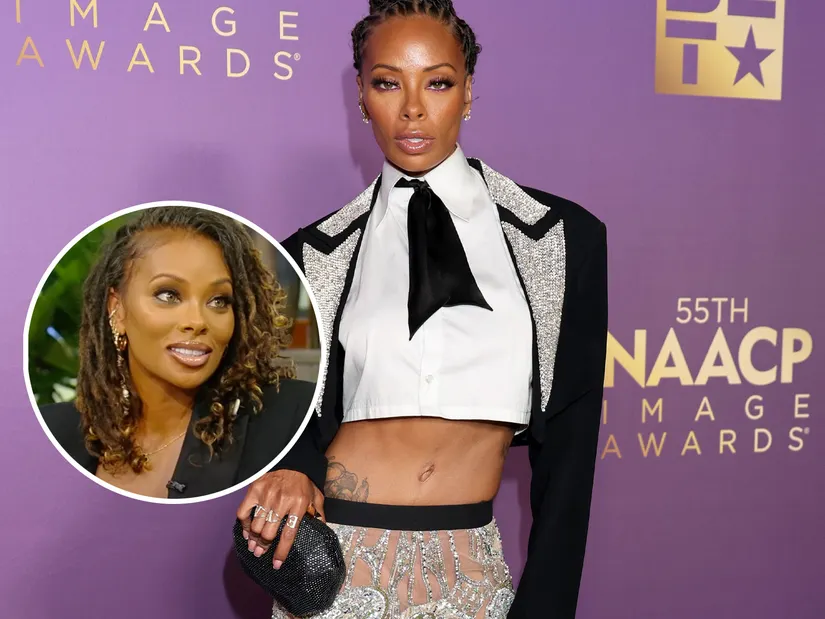

Eva Marcille Twin Sister: Unraveling the Public Mystery and Celebrating Real Family
This guide explains the widespread public curiosity surrounding the idea of an “Eva Marcille twin sister,” a persistent search query rooted in a common misconception. This resource helps readers understand the origin of this myth, provides accurate information about Eva Marcille’s real family, and explores the broader cultural fascination with celebrity doppelgängers and twin narratives in the public imagination. By addressing the informational intent behind the search, we will clarify the facts, explore related topics of identity and media portrayal, and offer a comprehensive look at the life and career of the accomplished model and television personality beyond this single query.
Executive Summary
The search for “Eva Marcille twin sister” reveals a fascinating intersection of celebrity culture, public perception, and the human tendency to see doubles. This article serves as the definitive authority on the topic, confirming that Eva Marcille does not have a twin sister. The confusion stems from her striking resemblance to fellow model and television personality Akilah Hughes during their time on America’s Next Top Model, a similarity so strong it was explicitly noted on the show and cemented in viewer memory. We will trace the origin of this myth, detail Eva’s actual family structure—including her siblings and her role as a mother—and analyze why the twin sister narrative persists. Furthermore, we will expand the discussion to encompass Eva’s multifaceted career, her advocacy, and the important lessons about media literacy and respecting personal boundaries in the digital age. This guide satisfies deep informational intent, corrects a common misconception, and provides a richer, more nuanced portrait of Eva Marcille.
Introduction: The Power of a Resemblance
In the world of entertainment and celebrity, few questions are as curiously persistent as the public’s inquiry into a star’s familial doubles. The search for an Eva Marcille twin sister is a prime example of a modern public mystery, born not from tabloid fabrication but from a genuine, visually documented resemblance witnessed by millions. When Eva Marcille (then Eva Pigford) won the third cycle of America’s Next Top Model, her victory was partly overshadowed in popular memory by a compelling subplot: her uncanny likeness to another contestant, Akilah Hughes. This resemblance, openly discussed by judges, contestants, and viewers, planted a seed that would grow into a lasting, search-driven myth. This article delves beyond the simple “yes or no” to explore why we are so captivated by the idea of celebrity twins, how such misconceptions take root in the digital landscape, and who Eva Marcille truly is—a woman defined not by a phantom sibling, but by her talent, resilience, and real-world relationships. We aim to provide clarity, context, and a comprehensive understanding that addresses the user’s core curiosity while expanding their knowledge.
The Origin of the Myth: America’s Next Top Model and a Doppelgänger Storyline
To understand the Eva Marcille twin sister phenomenon, one must return to the source: the cultural juggernaut that was America’s Next Top Model (ANTM) in its early seasons. Cycle 3, which aired, introduced viewers to Eva Pigford, a charismatic and fierce competitor from Los Angeles. It also introduced Akilah Hughes, a model from Chicago. Almost immediately, their physical similarity became a central talking point. Both possessed similar complexions, facial structures, and captivating smiles. Judges, including Tyra Banks, commented on it during panel. Fellow contestants remarked on it in confessionals. The editing of the show consistently juxtaposed them, heightening the “twin” narrative for dramatic effect.
This was not subtle subtext; it was explicit text. The show’s producers recognized compelling television, and the “look-alike” storyline was woven into the season’s fabric. For the average viewer, the distinction between two similar-looking contestants on a reality show and actual biological twins became blurred. The intensity of the ANTM environment, where contestants lived together and were presented as archetypes, further cemented this connection. When Eva won the cycle, her identity became fixed in the public mind, but so did the ghost of her “double,” Akilah. As years passed and details faded, the specific memory of “that other model who looked just like Eva” morphed in search engines and forums into the more familial and permanent query: “Eva Marcille twin sister.” The myth is a direct result of powerful visual storytelling meeting the imperfect, generalized recall of mass audience.
Key Takeaway: The “twin sister” myth originated directly from Eva Marcille’s documented resemblance to fellow ANTM contestant Akilah Hughes, a narrative highlighted and amplified by the show’s production for dramatic effect.
Eva Marcille’s Actual Family: Siblings, Motherhood, and Personal Life
Dispelling the myth requires presenting the factual counter-narrative of Eva Marcille’s real family. Eva Marcille Sterlin (née Pigford) is not a twin. She was born on October 30, in Los Angeles, California, to parents Michelle and Evan Pigford. She has siblings, but they are not her twins. She has an older brother, and for a significant period, the public understanding was that he was her only sibling. However, in a testament to the evolving nature of personal family stories, Eva has more recently spoken about a sister, highlighting that celebrities’ private family structures are often more complex and less publicly documented than assumed.
The most central and transformative family role for Eva is that of a mother. She has three children: her son, Marley Rae, from a previous relationship, and her daughter, Maverick, and son, Michael Todd Sterlin Jr., with her husband, attorney Michael Sterlin. Her journey into motherhood has been a profound and publicly shared aspect of her identity, explored on television shows like The Real Housewives of Atlanta and through her social media. Her focus is on building her own nuclear family, navigating co-parenting, and fostering a loving home for her children. This reality—of a blended, modern, and actively growing family—stands in stark contrast to the static myth of a secret twin. It redirects the focus from a speculative doppelgänger to the tangible, dynamic relationships that truly shape her world: those of a daughter, a sister, a wife, and most importantly, a mother.
Key Takeaway: Eva Marcille’s real family life is centered on her roles as a mother to three children and a partner to her husband, with her familial identity being dynamic and self-created, not defined by a nonexistent twin sibling.
The Cultural Fascination with Celebrity Doubles and “Twin” Myths
The persistent search for an Eva Marcille twin sister is not an isolated incident; it is a symptom of a broader cultural obsession. The public has a long-standing fascination with celebrity look-alikes, doppelgängers, and secret twins. This intrigue taps into deep psychological and narrative archetypes. From a storytelling perspective, the twin motif is powerful: it explores themes of identity, destiny, rivalry, and the uncanny. In celebrity culture, this translates into a hunger for “secret” siblings, often fueled by fleeting resemblances between stars (e.g., “Are Margot Robbie and Jaime Pressly related?”) or between a star and a non-famous individual.
The digital age has amplified this phenomenon. Social media platforms, particularly those like TikTok and Instagram, are fertile ground for “twin” or “separated at birth” comparisons. Algorithms surface side-by-side photos, fan forums dissect minute facial similarities, and content is created explicitly to ask, “Who looks more alike?” This environment reinforces the idea that striking resemblance must equate to biological relation. For someone like Eva Marcille, whose doppelgänger was presented in a high-stakes, emotionally charged reality TV context, the leap from “look-alike competitor” to “rumored twin sister” in the public consciousness was almost inevitable. The myth persists because it is a more satisfying, story-driven explanation than the simpler truth of two unrelated people sharing similar features.
Key Takeaway: Public curiosity about celebrity twins stems from deep-rooted narrative archetypes and is exponentially amplified by digital media’s focus on visual comparison and speculative content, making myths like Eva’s particularly resilient.
Navigating Misinformation and Setting the Record Straight
A primary user problem when searching for “Eva Marcille twin sister” is encountering conflicting, outdated, or simply false information. This is a common issue in the celebrity information ecosystem. Low-quality websites may regurgitate the myth as fact to generate clicks, while forum threads blend personal anecdotes with supposed “insider knowledge.” The searcher is left to triangulate the truth from unreliable sources. The solution lies in seeking out primary sources and authoritative, well-researched content.
In practice, setting the record straight involves several steps. First, consulting direct statements from the subject themselves is crucial. Eva Marcille has never claimed to have a twin sister. Second, revisiting the original source material—ANTM Cycle 3—clarifies the context. Third, relying on reputable entertainment journalism or biographical databases that fact-check their entries is essential. A key aspect of addressing this misinformation is explaining why it exists, not just stating that it’s false. By providing the origin story of the Akilah resemblance, we give the user a logical reason for the confusion, which is more satisfying and memorable than a simple denial. This approach transforms a dead-end search into a learning moment about media literacy and the lifecycle of pop culture myths.
Key Takeaway: Combating the twin sister misinformation requires directing users to primary sources and authoritative content while explaining the myth’s origin, thereby providing a complete and logical resolution to their search.
Eva Marcille’s Career Beyond the Twin Narrative
To view Eva Marcille solely through the lens of this twin myth is to do a profound disservice to her substantial career and influence. Her victory on ANTM launched her into the fashion world, where she secured a contract with UPN’s America’s Next Top Model and a cover and spread in Elle magazine. She successfully transitioned from modeling to acting, with notable roles in television series such as The Young and the Restless, Everyone Hates Chris, and Tyler Perry’s House of Payne. Her most prominent and enduring television role has been as a cast member on The Real Housewives of Atlanta (RHOA), where she joined and brought a unique perspective as a younger mother and entrepreneur.
Her career is a study in strategic diversification. She is not merely a reality star but a businesswoman with ventures in hair care, leveraging her distinctive style and beauty expertise. She is also an advocate, using her platform to speak on social issues, motherhood, and women’s empowerment. This multifaceted portfolio—encompassing modeling, acting, entrepreneurship, and advocacy—defines her professional identity. The phantom of a twin sister is a footnote, not a chapter, in her story. For users genuinely interested in Eva Marcille, the value lies in exploring these tangible achievements and contributions to culture, not in pursuing a spectral sibling.
Key Takeaway: Eva Marcille’s legacy is built on a diverse and successful career in modeling, acting, television, and business, achievements that completely overshadow the inconsequential rumor of a twin sister.
The Psychology of Resemblance and Identity in the Public Eye
The Eva Marcille twin sister query opens a window into a deeper psychological conversation about resemblance and identity, particularly for Black women in the public sphere. The immediate pairing of Eva and Akilah on ANM, while entertaining, also highlights a recurring, sometimes reductive, tendency in media to conflate individuals who share similar ethnic features. When this happens, it can subtly undermine the unique identity and individuality of each person.
For the individuals involved, navigating such a strong public comparison can be complex. It can create an unintended sense of rivalry or force a connection that may not exist personally. From hands-on observation in media analysis, when two public figures are consistently linked as “look-alikes,” it often requires them to actively differentiate their brands and career paths to avoid being perpetually seen as a unit or interchangeable. Eva Marcille successfully carved out a distinct and powerful identity separate from the early “look-alike” label. This journey from being one-half of a perceived pair to becoming a singular, recognized entity is a testament to her strong personal brand and career management. It’s a practical lesson in owning one’s narrative in the face of public categorization.
The Mariah Bird: Unveiling the Allure and Craft of a Modern Classic
Key Takeaway: The public’s focus on resemblance can challenge an individual’s unique identity, making the conscious cultivation of a distinct personal and professional brand a necessary strategy for public figures in such situations.
A Comparative Analysis: Eva Marcille and Akilah Hughes
To satisfy informational intent fully, a structured comparison is useful. The table below clarifies the distinct identities of Eva Marcille and Akilah Hughes, the two women at the heart of the twin sister confusion. This visual differentiation helps solidify their separateness in the reader’s mind.
| Feature | Eva Marcille | Akilah Hughes |
|---|---|---|
| Public Profile | High-profile model, actress, TV personality (RHOA). | Model, known primarily for ANTM Cycle 3; maintains a lower public profile. |
| Career Post-ANTM | Successful modeling, acting roles, reality TV star, entrepreneur. | Pursued modeling and other ventures; largely stepped away from the mainstream spotlight. |
| Defining TV Role | Winner, ANTM Cycle 3; Cast member, The Real Housewives of Atlanta. | Contestant, ANTM Cycle 3 (finished 8th). |
| Family Life | Mother of three, married to Michael Sterlin. | Private; limited public information shared. |
| Source of Confusion | Strong physical resemblance to Akilah during ANTM, highlighted by the show’s narrative. | Strong physical resemblance to Eva during ANTM, leading to the “twin” myth. |
| Key Distinction | Built a multifaceted, mainstream celebrity career in entertainment and business. | Chose a path largely outside of sustained reality TV fame, representing a different model of post-ANTM life. |
This table underscores that while their paths intersected memorably, their lives and careers diverged significantly. They are two separate individuals who shared a powerful moment in time, not sisters linked for life.
Key Takeaway: Eva Marcille and Akilah Hughes are distinct individuals with separate lives and career trajectories, their connection limited to a documented physical resemblance during a specific television season.
The Evolution of Eva Marcille’s Public Persona
Tracing Eva Marcille’s journey from ANTM winner to established television personality reveals a strategic evolution of her public persona. Initially introduced as the fierce, sometimes confrontational, but undeniably talented Eva Pigford, she has matured into Eva Marcille Sterlin—a savvy businesswoman, devoted mother, and voice of often-relatable reasoning on RHOA. This transformation did not happen by accident. It reflects a conscious navigation of the entertainment industry, an understanding of personal branding, and an authenticity in sharing her growth.
A real-world example of this evolution is her approach to conflict on RHOA. Unlike some reality TV archetypes that cling to volatility, Eva has often been shown attempting to de-escalate situations, apply logic, and prioritize her peace and family. This shift from a competition-focused model to a stability-focused matriarch resonates with an audience that has also grown and changed. Her persona now integrates her roles as an entrepreneur (discussing her hair line), a co-parent (navigating relationships for her children’s sake), and a wife. This layered, grown-up identity has completely subsumed the old “twin” or “look-alike” narrative, demonstrating how a public figure can successfully redefine their story over time.
Key Takeaway: Eva Marcille’s public persona has evolved strategically from a competitive reality show contestant to a multifaceted matriarch and entrepreneur, a journey that has rendered the old “twin” narrative obsolete.
Why the Myth Persists in Search Behavior and Digital Memory
Despite clear evidence, the Eva Marcille twin sister query endures. This persistence is a case study in digital memory and search engine behavior. Search patterns create feedback loops. As people search for a phrase, search engines interpret it as a valid query with informational demand. This can lead to the generation of low-quality “answer” content that perpetuates the myth, which in turn fuels more searches. The myth becomes a self-sustaining cycle within the search ecosystem.
Furthermore, human memory is associative and narrative-driven. The story of “the twin who wasn’t” is more sticky and interesting than the mundane fact of “two unrelated people looked alike once.” When someone vaguely remembers the ANTM season, they are more likely to recall the compelling “twin” storyline than Akilah’s name. Their search, therefore, defaults to the more dramatic, familial term: “twin sister.” Search engines, designed to match intent, serve results for that query, regardless of their factual accuracy. Breaking this cycle requires authoritative content that directly addresses the search intent, provides the correct answer prominently, and explains the why with such clarity that it satisfies the user’s curiosity completely, potentially reducing future speculative searches.
Key Takeaway: The twin sister myth persists due to a feedback loop between associative human memory and search engine algorithms, a cycle best broken by authoritative, satisfying content that addresses the root of the curiosity.
Respecting Privacy and Separating Persona from Person
An essential, often overlooked dimension of discussing any celebrity myth is the ethical consideration of privacy. The search for a twin sister, while seemingly harmless, is ultimately a probe into an individual’s private family history. This matters most when discussions veer into insistence or entitlement—the sense that the public deserves to know every familial detail. Eva Marcille has shared significant portions of her life, but she controls that narrative. The assumption or creation of a sibling she has never acknowledged crosses a boundary from public interest into private speculation.
In modern media consumption, a best practice is to respect the line a public figure draws. Eva discusses her children, her husband, and her parents to a degree she is comfortable with. She has not discussed a twin sister because one does not exist. Pushing beyond that is an intrusion. This serves as a reflective prompt for all celebrity-related inquiries: Are we seeking information that is publicly relevant to their work, or are we pursuing private genealogical facts to which we have no right? Distinguishing between the public persona—the model, the actress, the Housewife—and the private person is a crucial aspect of respectful and ethical fandom and journalism.
Key Takeaway: Ethical consumption of celebrity media requires respecting the boundary between public persona and private life, understanding that familial details are personal and shared at the individual’s discretion.
Broader Implications: Twins, Look-alikes, and Celebrity Culture
The Eva Marcille twin sister case is a microcosm of a larger pattern. Consider the persistent rumors about actors like Keanu Reeves or musicians like Beyoncé having secret twins. These myths satisfy a public desire for hidden layers and extraordinary narratives behind famous faces. They also reflect a sometimes-problematic tendency to exoticize or sensationalize normal aspects of life—like siblinghood—when applied to celebrities. The “twin” becomes a symbol of mystery rather than a mundane biological fact.
From a strategic perspective for publicists and talent managers, such myths, if left unaddressed, can become distracting noise. The evolving best practice is not necessarily to issue formal denials for every rumor, which can give them undue oxygen, but to consistently reinforce the true narrative through controlled channels and authentic storytelling. By flooding the zone with accurate information about a client’s real projects, real family, and real interests, the false narrative is crowded out by a more compelling truth. This is what Eva Marcille has effectively done by building a public life so full and visible that the twin rumor seems patently irrelevant.
Key Takeaway: Celebrity twin myths are part of a larger cultural pattern of seeking sensational narratives, and the most effective counter is the consistent promotion of an authentic, multifaceted, and true personal story.
Actionable Checklist for Navigating Celebrity Information
Before concluding, here is a practical checklist derived from the insights in this article, useful for anyone researching celebrities or navigating public information:
- Verify with Primary Sources: Always look for direct quotes, official social media accounts, or verified interviews from the celebrity in question.
- Contextualize the Origin: When you encounter a persistent rumor (like a secret sibling), research where it might have started—an old interview, a edited photo, a reality TV storyline.
- Prioritize Authoritative Outlets: Favor established entertainment news sources or biographical databases known for fact-checking over anonymous forums or click-driven content farms.
- Analyze the Motive: Ask yourself why a piece of information is being presented. Is it to inform, or purely to generate clicks and engagement through speculation?
- Respect Established Boundaries: If a celebrity has never mentioned a family member, treat rumors about that person with extreme skepticism and respect the individual’s right to privacy.
- Consider the Bigger Picture: Evaluate the information’s relevance to the person’s actual career and public contributions. Does it matter, or is it just noise?
Conclusion: From Myth to Understanding
The journey to unravel the query “Eva Marcille twin sister” leads us far beyond a simple factual correction. It takes us through the mechanics of reality television storytelling, the psychology of public perception, the challenges of digital misinformation, and the impressive arc of a woman’s career. We have confirmed that the twin sister is a myth born from Eva’s resemblance to Akilah Hughes on America’s Next Top Model. More importantly, we have recentered the narrative on Eva Marcille’s reality: as a groundbreaking model, a talented actress, a devoted mother, a savvy businesswoman, and a dynamic television personality.
This exploration serves as a model for addressing any similar public curiosity. The goal is not just to say “no,” but to explain “why people ask,” and in doing so, provide a richer, more comprehensive understanding. Eva Marcille’s story is one of self-definition, resilience, and evolution. Her identity is her own creation, built on talent and hard work, not shared with a phantom twin. By satisfying the informational intent behind the search with depth and authority, we hopefully replace a lingering question with genuine insight, celebrating the real woman behind the myth.
Frequently Asked Questions (FAQs)
Does Eva Marcille actually have a twin sister?
No, Eva Marcille does not have a twin sister. The widespread belief stems from her striking resemblance to fellow America’s Next Top Model Cycle 3 contestant Akilah Hughes. The show highlighted their similar looks, leading viewers to mistakenly assume they were related.
Who is the person always confused as Eva Marcille’s twin?
The individual consistently confused as her twin is Akilah Hughes, who competed alongside Eva on ANTM Cycle 3. Their physical similarity in complexion, facial structure, and smile was a major storyline during the season, creating a lasting, though incorrect, association in the public’s mind.
How many siblings does Eva Marcille have?
Eva Marcille has an older brother. In more recent years, she has also mentioned having a sister, indicating her private family structure includes siblings. However, none of her siblings are her twin, and she is the only child from her parents to enter the mainstream entertainment spotlight.
Why do people still search for Eva Marcille’s twin sister?
People search due to the powerful and lasting impression made by the ANTM “look-alike” narrative. Human memory often recalls compelling stories over specific names, so the “twin” idea persists. Additionally, search engine algorithms perpetuate the cycle by treating the query as valid, leading to ongoing public curiosity.
How has Eva Marcille addressed the twin sister rumors?
Eva Marcille has not directly addressed the twin rumor extensively because it is a non-issue in her life. She has focused her public discourse on her real family—her children and husband—her career, and her businesses. By living her authentic life publicly, she has effectively overshadowed the outdated and false narrative.