
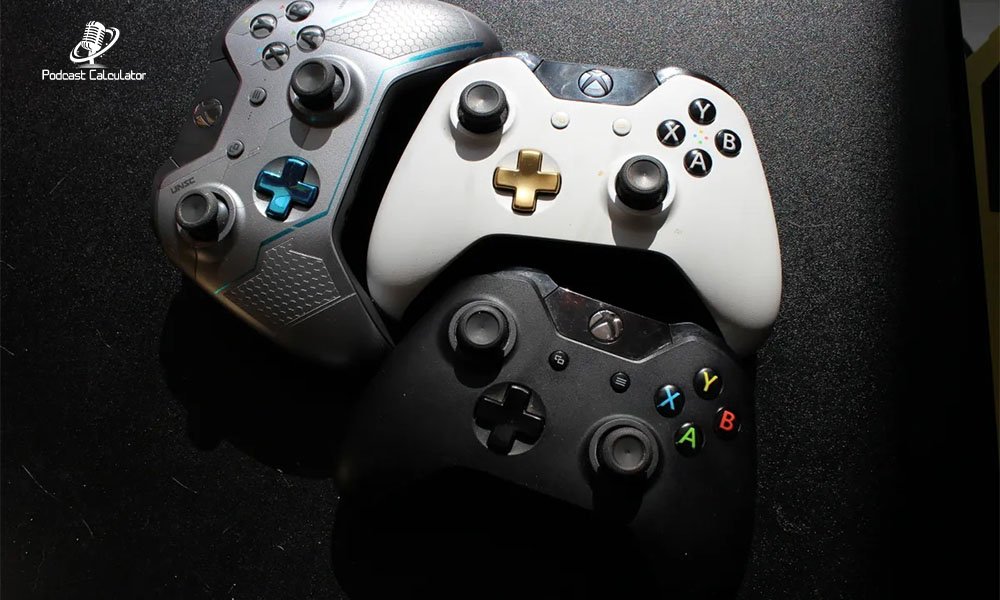

In the high-stakes world of PC and console gaming, your controller is your primary interface with virtual worlds. It’s an extension of your intent. When it works flawlessly, you achieve immersion. When it stutters, lags, or disconnects, the illusion shatters instantly, often at the most critical moment. Among the myriad of controller brands and models, HSS gamepads have carved out a reputation for robust build quality and ergonomic design. However, like any sophisticated input device, their true potential is wholly dependent on one foundational element: a perfect, stable connection. This comprehensive guide is your definitive resource for mastering connectivity hssgamepad challenges. We will move beyond basic “plug and play” assumptions, diving deep into the layers of hardware interfaces, wireless protocols, software drivers, and system-level optimizations that dictate performance. Whether you’re battling input delay in a competitive shooter, troubleshooting a stubborn pairing process, or seeking to future-proof your setup, understanding the nuances of your HSS controller’s connection is the first step to unparalleled control and reliability.
Understanding Core Connectivity Technologies
Modern HSS gamepads offer a suite of connection methods, each with its own technical profile of advantages, compromises, and ideal use cases. The classic wired USB connection remains the gold standard for competitive gaming due to its inherently minimal latency and unwavering reliability, transmitting data directly without the need for encoding or radio transmission. For wireless freedom, Bluetooth provides universal compatibility with a wide range of devices, though it can be susceptible to interference in crowded RF environments and may introduce slightly higher latency compared to proprietary solutions.
Conversely, many HSS models utilize a dedicated 2.4GHz wireless USB dongle, a technology designed specifically for high-performance peripherals. This method operates on a less congested frequency band than standard Bluetooth, often employs advanced frequency-hopping techniques to avoid interference, and uses a optimized protocol for lower latency and more consistent data packets. Understanding this technological landscape is crucial because the choice of connection directly influences the responsiveness and stability you experience, forming the bedrock of your connectivity hssgamepad strategy.
Troubleshooting Common Connection Failures
When an HSS controller fails to connect or drops out unexpectedly, systematic troubleshooting is key. Begin with the physical essentials: inspect the USB cable for damage, try a different USB port (preferably a direct motherboard port rather than a hub), ensure the controller battery is adequately charged for wireless use, and power-cycle both the controller and your PC or console. For dongle-based connections, physically relocating the receiver to a front-panel USB port with a clearer line-of-sight to the controller can dramatically improve signal integrity by reducing physical obstructions.
If hardware checks pass, the issue often resides in the software domain. Outdated or corrupted device drivers are a primary culprit for connection instability. Navigate to your system’s Device Manager, locate the HSS controller under “Human Interface Devices” or “Xbox peripherals,” uninstall the device, and then either restart your PC to trigger a fresh driver install or manually install the latest drivers from the official HSS support portal. This process clears corrupted configuration data and ensures your operating system has the correct instructions to communicate with the gamepad, resolving a significant portion of persistent connectivity hssgamepad issues.
Optimizing Wireless Performance and Reducing Latency
Achieving peak wireless performance with your HSS gamepad involves strategically managing your environment and system settings. Radio frequency interference is the nemesis of stable wireless connections; common sources include Wi-Fi routers, microwave ovens, cordless phones, and even dense arrays of Bluetooth devices. Position your 2.4GHz dongle away from these sources and from the back of metal PC cases. If using Bluetooth, consider disabling other nearby Bluetooth devices not in use to free up bandwidth for your controller’s input stream.
On the software side, delve into your PC’s power management settings. The default “Balanced” power plan can throttle USB ports to save energy, causing momentary disconnects. Switch to the “High Performance” plan and, within Device Manager, access the properties of your USB root hubs to disable the setting that allows the computer to turn them off to save power. For the ultimate low-latency environment, close background applications that may poll for controller input, such as other game clients or peripheral management software, ensuring your game has exclusive, prioritized access to the HSS controller’s data stream.
The Critical Role Connectivity HSSGamepad of Drivers and Firmware
Drivers and firmware act as the essential translation layer between your HSS gamepad’s hardware and your computer’s operating system. A driver is software that allows Windows to recognize the controller and correctly interpret its button presses, analog stick movements, and trigger pulls. Using generic, outdated, or Windows-update-provided drivers can lead to feature loss, incorrect button mapping, and the very connectivity hssgamepad instability we aim to solve. Always source drivers directly from the manufacturer for guaranteed compatibility.
Firmware, on the other hand, is the low-level software embedded on the controller’s own internal chipset. Firmware updates are released less frequently but are vital, as they can patch bugs in the controller’s connection protocol, improve power management for longer battery life, and enhance the handshake process with its dongle. Neglecting firmware updates means your hardware is not performing to its latest potential. A best-practice routine involves checking the HSS official support page quarterly for both driver and firmware updates, treating them as critical maintenance for your gaming setup.
Advanced Configuration and Utility Software
Most HSS gamepads are supported by sophisticated configuration software, a powerful tool often underutilized by the average user. This utility is far more than a button mapper; it is the central hub for fine-tuning your connectivity hssgamepad profile. Within it, you can often adjust the polling rate—the frequency at which the controller reports its state to the PC. Increasing the polling rate from the default 125Hz to 250Hz or 500Hz can reduce latency, making the controller feel more instantly responsive, though it may impact battery life on wireless models.
Furthermore, this software allows for the creation and management of multiple device profiles. You can create a stable, high-polling-rate profile for competitive FPS gaming on your desktop PC, and a separate, power-saving profile with default settings for casual use on a laptop. The software also provides diagnostic tools, such as connection strength indicators and input testing panels, which are invaluable for verifying signal integrity and ensuring every button and trigger is registering correctly after you’ve resolved a connection problem.
PC vs. Console Connectivity Nuances

The connectivity experience for an HSS gamepad can differ significantly between a PC and a gaming console due to platform-level integration. On PC, the controller typically operates as a standard DirectInput or XInput device, with flexibility but also responsibility placed on the user to manage drivers and potential software conflicts. The open nature of the PC platform allows for deeper troubleshooting and optimization, as detailed throughout this guide, making mastery of connectivity hssgamepad principles on this platform both a challenge and an opportunity.
Console environments, such as PlayStation or Xbox ecosystems, are more closed and standardized. While an HSS controller designed for a specific console usually benefits from a streamlined, system-level pairing process, it also means troubleshooting options are limited to a few basic steps: hard resets, cache clearing, and controller re-syncing. Cross-platform HSS controllers that work on both PC and console via a mode switch add another layer; ensuring the controller is in the correct physical mode (D-Input vs. X-Input for PC, or the specific console mode) is the first and most crucial step when a connection fails on one platform but works on another.
The Impact of USB Connectivity HSSGamepad Standards and Hardware
Not all USB ports are created equal, and the standard of your USB hardware plays a tangible role in connection quality. An HSS controller connected to an aging USB 2.0 port on a front-panel header with poor motherboard wiring may experience minor but perceptible latency spikes or voltage drops compared to being plugged directly into a robust USB 3.1 port on the motherboard’s rear I/O panel. For wireless dongles, a high-quality USB extension cable can be a strategic investment, allowing you to place the dongle in an optimal, interference-free location on your desk rather than buried behind your PC case.
The cable itself is equally critical for wired play. A charging-only cable lacks the internal data wires necessary for communication and will not work. Always use the certified data-sync cable provided with the controller or a high-quality, shielded replacement. As one senior peripherals engineer noted, “A player’s perception of controller latency is often a sum of tiny delays across the entire chain—the game’s engine, the display, the USB host controller, and even the cable. Optimizing every single link is what separates a good experience from a great one.” This holistic view is essential for professional-grade connectivity hssgamepad performance.
Solving Interference Connectivity HSSGamepad and Signal Conflict
Signal interference is the most common cause of intermittent wireless connectivity hssgamepad problems, manifesting as random disconnects, “stick drift” that isn’t hardware-related, or increased input lag. The 2.4GHz band is incredibly crowded, hosting not only Wi-Fi and Bluetooth but also many smart home devices. The first line of defense is physical reconfiguration: moving your Wi-Fi router a few feet away from your gaming setup, or changing your router’s Wi-Fi channel to 1, 6, or 11 to avoid overlap with your controller’s frequency-hopping pattern.
For a more advanced solution, consider the ecosystem of your gaming space. If you use a wireless headset, keyboard, and mouse alongside your HSS controller, you are operating multiple 2.4GHz transceivers in close proximity. Some high-end peripheral suites allow you to sync multiple devices to a single unifying dongle, drastically reducing radio congestion. If that’s not an option, strategically choosing which devices use Bluetooth and which use a 2.4GHz dongle, and spacing their receivers apart, can create a cleaner RF environment for your gamepad’s critical input signal.
Long-Term Maintenance and Care
Sustaining flawless connectivity hssgamepad performance over the long term requires proactive maintenance. Periodically clean the controller’s USB-C or micro-USB port with compressed air to remove lint and dust that can prevent a solid physical and electrical connection. For wireless models, establish a routine battery management habit; avoid constantly draining the battery to zero, as this stresses lithium-ion cells and reduces their overall capacity and ability to provide stable voltage during a gaming session.
Software hygiene is equally important. Every few months, or after a major Windows update, revisit your device drivers and configuration utility. Windows Update can sometimes silently overwrite a manufacturer driver with a older, more generic version, reintroducing old issues. Bookmark the HSS support page and make a calendar note to check for updates. This disciplined approach to maintenance prevents problems from occurring in the first place, ensuring your controller remains a reliable tool rather than a source of frustration.
Future Trends Connectivity HSSGamepad in Controller Connectivity
The horizon of gamepad connectivity is rapidly evolving, promising to solve many current challenges. The adoption of Bluetooth 5.2 and the new LE Audio standard brings the potential for significantly lower power consumption and more robust, interference-resistant connections, which could extend battery life and range for future HSS wireless models. Furthermore, technologies like Wi-Fi 6E, which operates in the uncongested 6GHz band, are being explored for ultra-low-latency, high-bandwidth peripheral connections that could render current interference issues obsolete.
Another promising development is the move towards true multi-point and ecosystem connectivity. Imagine an HSS gamepad that can seamlessly switch its connection between your PC, your console, and your mobile device with a single button press, managing robust profiles for each. As the smart home and gaming spaces continue to converge, future connectivity hssgamepad protocols may integrate more intelligently with your home network, automatically optimizing their channel selection to avoid conflict with your router and other IoT devices, creating a truly plug-and-play, zero-configuration wireless experience.
Comparative Analysis of HSS Gamepad Connection Methods
| Feature / Metric | Wired USB | 2.4GHz Wireless Dongle | Standard Bluetooth |
| Primary Latency | Lowest (1-2ms) | Very Low (3-5ms) | Low to Moderate (5-15ms, variable) |
| Connection Stability | Perfect (Physical Link) | Excellent (Dedicated Protocol) | Good (Susceptible to RF Interference) |
| Ease of Setup | Trivial (Plug & Play) | Simple (Plug Dongle, Pair) | Moderate (OS Bluetooth Pairing) |
| Range & Mobility | Limited (Cable Length) | Good (~10m clear line-of-sight) | Good (~10m, but walls degrade signal) |
| Power / Battery | Powered by Port (No Battery) | Requires Battery (Good Life) | Requires Battery (Life varies) |
| USB Port Use | Yes (for data & power) | Yes (for dongle only) | No (if PC has built-in Bluetooth) |
| Ideal Use Case | Competitive Esports, Sim Racing | Living Room PC, Console, Lag-Sensitive Gaming | Mobile Gaming, Casual Use, Maximum Compatibility |
Conclusion
Mastering your HSS gamepad’s connectivity is not a one-time task but an ongoing practice of understanding the interaction between hardware, software, and your unique gaming environment. From selecting the right connection method for your needs to systematically eliminating interference and maintaining your device’s software health, each step builds towards a foundation of absolute reliability. This deep dive into connectivity hssgamepad principles empowers you to transform your controller from a mere accessory into a perfected instrument of input. By applying these insights, you eliminate the variable of your gear and can focus wholly on the game, confident that every command will be translated instantly and accurately. The path to flawless control is clear—it begins and ends with a rock-solid connection.
Frequently Asked Connectivity HSSGamepad Questions
What is the most reliable connection method for an HSS gamepad?
For absolute, no-compromise reliability and the lowest possible latency, a wired USB connection is unbeatable. It eliminates wireless interference and battery concerns entirely, providing a direct data pipe. This method is the cornerstone of stable connectivity hssgamepad for competitive gaming where every millisecond counts.
Why does my HSS controller keep disconnecting from Bluetooth?
Frequent Bluetooth disconnections are typically caused by radio frequency interference or power-saving settings. Ensure no other major 2.4GHz devices (like routers or microwaves) are operating nearby, and disable the Bluetooth power-saving feature in your Windows device settings. Often, switching to the dedicated 2.4GHz dongle resolves persistent Bluetooth connectivity hssgamepad issues.
How do I update the firmware on my HSS gamepad?
Firmware updates are performed through the official HSS configuration utility software, not through Windows Update. Connect your controller via USB, open the HSS utility, and navigate to the settings or support section, where a firmware update tool should be available if a new version is detected for your specific model.
Can I use one HSS wireless dongle for multiple controllers?
Generally, no. Most dedicated 2.4GHz dongles are paired to a single controller at the hardware level to maintain a stable, low-latency link. For multi-controller local play, you would typically need one dongle per controller, or connect additional controllers via a different method like Bluetooth or direct USB.
My HSS gamepad works on PC but not my console. What should I check?
First, verify the controller has a physical mode switch and that it is set to the correct console mode (e.g., “Switch” for Nintendo, “Android” for certain modes). Second, consult the manual for the specific pairing procedure for that console, as it often involves holding specific buttons rather than a standard PC pairing process. Ensuring proper connectivity hssgamepad across platforms requires following the correct platform-specific protocol