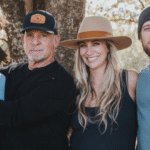


In an era defined by relentless technological disruption and complex global markets, the journey of a singular leader can offer a masterclass in adaptation, vision, and execution. The career trajectory of Paul Werdel stands as a compelling study of precisely that. Far more than a name on an executive profile, the professional path of Paul Werdel represents a multifaceted blueprint for driving meaningful change within large-scale, intricate organizations. His story is not one of flashy headlines, but of deep, operational intelligence and a steadfast commitment to aligning people, process, and technology toward a common strategic goal. To understand the impact of Paul Werdel is to delve into the mechanics of modern corporate transformation. It involves examining how foundational experience in finance and operations converges with forward-thinking digital strategy to build resilient, innovative enterprises. This article will explore the principles, decisions, and leadership philosophy that define his approach, offering insights valuable to aspiring executives, operational professionals, and anyone interested in the alchemy of sustained business success. The narrative of Paul Werdel provides a tangible framework for navigating the challenges of today’s business landscape.
Early Career and Werdel Foundational Expertise
Every impactful leader builds their authority upon a solid foundation of core skills and early professional trials. For Paul Werdel, this foundation was meticulously constructed in the rigorous disciplines of finance and operations management. These initial roles were far from mere stepping stones; they were immersive training grounds in the language of business performance, data-driven decision-making, and process optimization. This period instilled a granular understanding of how financial health and operational efficiency are inextricably linked—a perspective that would later become a hallmark of his strategic leadership.
Navigating the complexities of supply chain logistics, budget stewardship, and performance analytics during this formative phase provided Paul Werdel with an unparalleled ground-level view of organizational mechanics. He learned to diagnose inefficiencies, forecast outcomes with precision, and understand the real-world impact of corporate strategy on daily workflows. This hands-on, analytical beginning shaped a leadership style that values substance over spectacle and prioritizes sustainable systems over quick fixes. It established the bedrock of operational excellence upon which all his later, more visible achievements would securely stand.
The Ascent into Werdel Senior Leadership
Transitioning from expert practitioner to senior leader requires a fundamental shift in mindset—from managing processes to inspiring people and shaping culture. The ascent of Paul Werdel into executive roles demonstrates this evolution with clarity. As responsibilities expanded, the focus necessarily broadened from optimizing discrete functions to orchestrating entire business units or corporate divisions. This stage involved translating deep operational knowledge into compelling vision, setting strategic direction, and empowering teams to execute with autonomy and alignment.
In these roles, Paul Werdel began to synthesize his analytical background with the softer, yet critical, arts of leadership: communication, mentorship, and organizational design. The challenge was no longer just about improving a metric, but about building a high-performing team capable of continuous improvement. He cultivated environments where data informed dialogue, accountability was paired with support, and cross-functional collaboration was actively engineered. This phase of his career highlights how foundational expertise, when coupled with developed leadership acumen, creates a powerful force for scaling excellence across an organization.
Strategic Philosophy and Core Principles
At the heart of any enduring leadership impact lies a coherent and actionable philosophy. The strategic approach championed by Paul Werdel is not defined by a single tactic, but by a set of interconnected principles that guide decision-making. Central to this philosophy is the concept of “operational integrity,” where business strategy is seamlessly fused with day-to-day execution. This means that grand visions are deliberately broken down into manageable, measurable processes, ensuring that strategic goals are not just announced but are reliably achieved through systematic effort.
Another cornerstone principle is future-focused pragmatism. This involves balancing a clear-eyed assessment of current organizational realities with an ambitious yet realistic roadmap for technological and market evolution. For Paul Werdel, strategy is never static; it is a dynamic framework that must be regularly stress-tested and adapted. This principle rejects dogma in favor of agility, encouraging teams to innovate within a structured context. It’s a belief that sustainable growth is engineered through disciplined flexibility—preparing the organization not just for the next quarter, but for the next era.
Driving Digital Werdel Transformation and Innovation
In the contemporary business landscape, leadership is synonymous with the stewardship of digital change. The work of Paul Werdel frequently intersects with the critical imperative of digital transformation, which he approaches not as a simple technology upgrade, but as a holistic organizational rewiring. His methodology emphasizes that true transformation begins with clarity of business outcome—whether it’s enhancing customer experience, unlocking new revenue streams, or achieving unprecedented operational scale. Technology, in this view, is the powerful enabler, not the undefined destination.
This approach demystifies innovation, framing it as a scalable practice rather than a sporadic breakthrough. Under a leadership paradigm like that of Paul Werdel, innovation is embedded into the operational cadence through structured initiatives like cross-functional “labs,” dedicated R&D sprints, and partnerships with agile tech disruptors. It involves calculated risk-taking, where experiments are run, outcomes are measured rigorously, and successful pilots are rapidly industrialized. This creates a culture where evolution is continuous and digital capability becomes a core, enduring competitive advantage.
Leadership in Werdel Complex Organizational Turnarounds
Some of the most telling tests of an executive’s mettle come during periods of significant challenge or necessary turnaround. Here, the multifaceted skill set of a leader like Paul Werdel proves most valuable. Navigating a complex organizational turnaround requires a dual focus: stabilizing the immediate situation with decisive, often difficult, actions while simultaneously laying the groundwork for a future resurgence. It demands a diagnostic precision to identify root causes—be they in cost structures, market positioning, or internal culture—and the resolve to address them comprehensively.
This phase of leadership is characterized by transparent communication and resilient execution. It involves making strategic divestments, streamlining operations to core strengths, and often, revitalizing a demoralized workforce. The guiding principle is to build a simpler, stronger, and more agile organization from the foundations up. Success in this arena, as demonstrated in the career of Paul Werdel, is measured by the restoration of stakeholder confidence, the return to sustainable profitability, and the creation of a more adaptable and focused enterprise ready for its next chapter of growth.
Cultivating High-Performance Teams and Culture
An executive’s vision is only as potent as the team charged with its execution. A critical aspect of the leadership model exemplified by Paul Werdel is the deliberate cultivation of high-performance cultures. This goes beyond assembling talent; it is about architecting an environment where that talent can thrive, collaborate, and outperform expectations. It starts with setting unequivocal strategic priorities and ensuring every team member understands how their role ladders up to the larger mission, creating a powerful sense of purpose and alignment.
To sustain this, such a culture actively rewards curiosity, calculated risk-taking, and collaborative problem-solving. It provides teams with the tools and autonomy they need to excel, while maintaining clear accountability for results. For leaders like Paul Werdel, fostering this environment also means serving as a mentor and coach, removing systemic barriers to performance, and recognizing that a team’s intellectual and creative diversity is its greatest asset. The ultimate goal is to build a self-reinforcing ecosystem where excellence becomes the standard operating procedure.
Communication Werdel and Stakeholder Alignment
In complex organizations, brilliant strategy can falter without masterful communication. The ability to articulate a clear vision, rally diverse stakeholders, and manage both internal and external narratives is a superpower in the executive toolkit. The approach taken by Paul Werdel highlights communication as a strategic instrument, not a peripheral soft skill. It involves crafting messages that resonate with different audiences—from board members and investors to frontline employees and partners—ensuring all are moving in concert toward shared objectives.
This strategic communication is characterized by consistency, transparency, and frequency. It means translating complex operational and financial realities into accessible narratives that build trust and drive engagement. During transformation or turnaround scenarios, this becomes even more critical, as uncertainty can breed anxiety. Effective leaders use communication to provide a steadying hand, acknowledge challenges honestly, and celebrate milestones collectively. As one industry observer noted, “The best strategies are only theories until they are effectively communicated and embodied by the entire organization.” This alignment turns strategy from a document into a lived reality.
Navigating Werdel Industry Disruption and Change
Today’s leaders must operate with the constant hum of industry disruption in the background. The career of Paul Werdel offers insights into navigating this perpetual state of flux. Proactive navigation of disruption begins with external vigilance—a dedicated practice of scanning the horizon for technological shifts, emerging competitors, and evolving customer behaviors. It requires creating channels for market intelligence to flow freely into the strategic planning process, ensuring the organization is an informed participant in its industry, not a passive bystander.
Internally, navigating change requires building institutional agility. This means designing processes and structures that can pivot without breaking. It involves championing a mindset of continuous learning at all levels, where adapting to new information is valued over rigid adherence to old plans. For a leader like Paul Werdel, this is about fostering resilience, ensuring the organization can absorb shocks, seize emergent opportunities, and continuously reinvent aspects of itself to stay relevant. The goal is not to predict the future perfectly, but to build an organization that is robust and responsive enough to thrive in an unpredictable one.
Ethics, Integrity, and Werdel Sustainable Leadership
Long-term success is inextricably linked to the ethical foundation upon which an organization is led. The tenure of any respected executive, including Paul Werdel, underscores that sustainable authority is built on unwavering integrity. This translates to a commitment to transparent governance, fair dealing with all partners, and a genuine sense of responsibility toward employees, customers, and communities. In an era where social and environmental governance is critically scrutinized, this ethical compass is a non-negotiable component of modern leadership.
This principle moves beyond compliance to embody a deeper stewardship. It involves making decisions that may forgo short-term advantage in favor of long-term reputation and sustainability. It means cultivating a culture where ethical considerations are part of every strategic discussion, from supply chain management to data privacy. Leadership grounded in this way earns the deep trust necessary to guide an organization through inevitable challenges, ensuring its legacy is one of respect and positive contribution, not just financial performance.
Legacy and Impact Werdel on Modern Enterprise
The ultimate measure of a leader’s work is the enduring imprint they leave on the organizations and people they guide. The impact associated with Paul Werdel provides a template for a legacy of substantive, rather than superficial, change. This impact is often visible in the strengthened operational frameworks, matured leadership pipelines, and embedded cultural values that persist long after an executive’s tenure. It’s a legacy measured in institutional capability—the enhanced ability of an organization to learn, adapt, and excel independently.
Furthermore, such a legacy influences the broader practice of management itself. By demonstrating that rigorous operational discipline and human-centric leadership are not opposites but complements, this approach offers a replicable model for others. It challenges the notion of the lone visionary CEO, instead advocating for the strategic operator who builds systems for enduring success. The work of Paul Werdel, therefore, contributes to a more nuanced understanding of enterprise leadership—one where depth of execution is as celebrated as the height of vision.
Comparative Analysis: Operational vs. Visionary Leadership Styles
| Leadership Dimension | Operational-Strategic Leader (e.g., Paul Werdel) | Charismatic-Visionary Leader |
| Primary Focus | System integrity, process excellence, and scalable execution. | Big-picture vision, market inspiration, and transformative goals. |
| Decision-Making Driver | Data analytics, risk assessment, and return on investment. | Intuition, future trend identification, and disruptive potential. |
| Key Strength | Building resilient, efficient, and predictable organizations. | Mobilizing people around a new, exciting direction or identity. |
| Potential Blind Spot | May be perceived as overly cautious or less “revolutionary.” | Can underweight execution complexity and systemic integration. |
| Communication Style | Clear, precise, fact-based, focused on “how” and “when.” | Evangelistic, metaphorical, focused on “why” and “what if.” |
| Ideal Organizational Context | Turnarounds, scaling phases, complex integrations, efficiency drives. | Market creation, brand revitalization, early-stage hyper-growth. |
| Lasting Legacy | Institutional processes, a culture of accountability, and a strong talent bench. | A powerful brand narrative, a shift in industry paradigm, and loyal followers. |
Conclusion
The professional narrative of Paul Werdel is a powerful testament to the enduring value of strategic, operational, and principled leadership. In dissecting his career trajectory—from foundational expertise to executive impact—we uncover not just the story of one individual, but a veritable playbook for guiding modern enterprises through complexity and change. The lessons are clear: sustainable success is forged at the intersection of deep analytical understanding, a commitment to people and culture, and the agile application of technology. It is built by leaders who see their role as architects of capability, not just heralds of ambition. As the business world continues to accelerate, the demand for this balanced, insightful, and execution-oriented leadership will only intensify. The blueprint demonstrated by Paul Werdel provides a reliable guide for meeting that demand, offering a path to building organizations that are not only successful today but are resilient, ethical, and innovative enough to define tomorrow.
Frequently Asked Questions
What are the core leadership principles associated with Paul Werdel?
The leadership approach linked to Paul Werdel is built on principles like operational integrity, where strategy is tightly coupled with execution; future-focused pragmatism, balancing current reality with ambitious adaptation; and a steadfast commitment to ethical governance. These principles emphasize building scalable systems, cultivating high-performance teams, and driving digital transformation with clear business outcomes in mind.
How did Paul Werdel’s early career shape his executive approach?
Paul Werdel’s foundational experience in finance and operations provided a critical, ground-level understanding of business mechanics. This period honed his skills in data-driven decision-making, process optimization, and financial stewardship. It instilled a mindset that values granular insight and systemic efficiency, which became the bedrock of his later strategic leadership and his ability to diagnose and solve complex organizational challenges.
What is Paul Werdel’s strategy for managing digital transformation?
The strategy exemplified by Paul Werdel treats digital transformation as an organizational rewiring, not just a tech upgrade. It starts by defining precise business outcomes first, then leveraging technology as the enabler. This involves embedding innovation into operational cadence through structured experiments, partnerships, and scaling successful pilots, ensuring digital initiatives deliver tangible value and sustainable competitive advantage.
How does Paul Werdel’s approach differ from a purely visionary leadership style?
While visionary leaders often focus on inspirational goals and market disruption, the approach associated with Paul Werdel is more operational-strategic. It prioritizes building resilient systems, meticulous execution, and scalable processes to achieve well-defined objectives. This style excels in turnarounds, scaling, and complex integrations, ensuring that grand visions are reliably translated into operational reality.
What kind of legacy is Paul Werdel known for in the businesses he leads?
The legacy tied to Paul Werdel is one of enhanced institutional capability and sustainable practice. It typically includes strengthened operational frameworks, a mature pipeline of leaders, and a culture of accountability and continuous improvement. This impact ensures organizations are left more agile, resilient, and self-sufficient, with the embedded systems to thrive long after his direct involvement.