
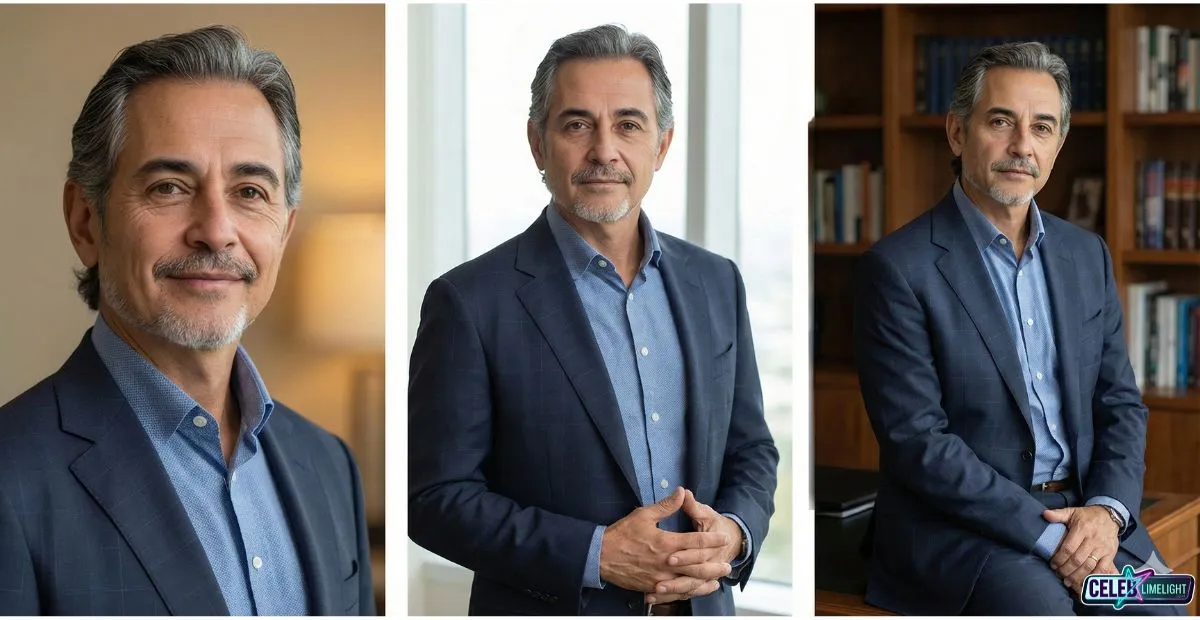

In the dynamic landscape of modern leadership and strategic innovation, few names carry the weight of authentic, results-driven transformation quite like Juan Ramírez Montroso. His journey is not merely a chronicle of personal success but a compelling blueprint for building resilient organizations, fostering human-centric cultures, and achieving sustainable impact in an increasingly complex world. This article delves deep into the philosophy, methodologies, and enduring legacy of Juan Ramírez Montroso, moving beyond the superficial accolades to uncover the core principles that make his approach so uniquely effective. From his foundational experiences to his forward-looking insights on adaptive leadership, we will explore how the work of Juan Ramírez Montroso serves as a critical guide for entrepreneurs, executives, and changemakers aiming to navigate the challenges of the 21st century. Understanding his framework is more than an academic exercise; it is an investment in a more agile, empathetic, and purposeful mode of operation.
The Formative Years and Foundational Philosophy
The professional ethos of Juan Ramírez Montroso was forged in the crucible of diverse and challenging early experiences. Unlike many theorists, his insights are not born solely in the rarefied air of academia but are deeply rooted in practical, on-the-ground application across varied sectors, including technology startups, large-scale industrial operations, and non-profit initiatives. This multifaceted exposure gifted him with a rare panoramic view of organizational dynamics, allowing him to identify universal patterns of success and failure that transcend industry boundaries. It was here that he cultivated a fundamental belief: that sustainable success is inherently human-centric, built on trust, clear communication, and aligned purpose rather than rigid hierarchies or short-term financial metrics alone.
This foundational period crystalized into the central tenet of the Juan Ramírez Montroso philosophy: integrated strategic resilience. He posits that true organizational strength lies not in unyielding rigidity but in the capacity to adapt, learn, and evolve while maintaining core ethical and operational integrity. For him, strategy and culture are not separate domains but interconnected systems. A brilliant market strategy will falter in a toxic culture, just as a positive culture without strategic direction leads to complacency. This dual focus on the hard and soft elements of business—the numbers and the narratives—defines his holistic approach. Juan Ramírez Montroso argues that leaders must become architects of these integrated systems, designing environments where both people and performance can thrive synergistically.
Deconstructing the Integrated Leadership Framework
At the heart of Juan Ramírez Montroso’s methodology is a structured yet flexible framework that demystifies the art of leadership. He breaks down leadership into four interdependent pillars: Contextual Intelligence, Cohesive Team Sculpting, Systemic Process Design, and Ethical Value Creation. Contextual Intelligence involves the deep reading of market signals, internal morale, and global trends to make informed decisions—it’s the antithesis of leading in a vacuum. Cohesive Team Sculpting moves beyond simple team-building to actively designing groups with complementary cognitive diversity, psychological safety, and shared accountability. This pillar reflects his belief that the smartest person in the room is the room itself, if constructed correctly.
The remaining pillars operationalize this human potential. Systemic Process Design focuses on creating clear, efficient, and adaptable workflows that empower rather than constrain teams. It’s about building the guardrails and pathways that enable excellence to become routine. Finally, Ethical Value Creation ensures that all activities are anchored in generating genuine, sustainable value for all stakeholders—employees, customers, communities, and shareholders. For Juan Ramírez Montroso, profit is an outcome of value creation, not its sole purpose. This framework is not a linear checklist but a dynamic cycle, where each pillar reinforces and informs the others, creating a self-improving leadership ecosystem.
Strategic Foresight and Adaptive Execution
A signature strength in the work of Juan Ramírez Montroso is his emphasis on strategic foresight coupled with relentless execution. He distinguishes between mere planning—a static document—and foresight, which is an active, ongoing discipline of exploring multiple futures, identifying weak signals of change, and stress-testing assumptions. His workshops often involve scenario-planning exercises that challenge leaders to think beyond the next quarter to the next decade, considering geopolitical, technological, and social shifts. This process is designed to build organizational muscles for anticipation, reducing the likelihood of being blindsided by disruption and turning potential threats into avenues for innovation.
However, foresight without execution is mere speculation. Juan Ramírez Montroso pairs this forward-looking vision with a pragmatic doctrine of adaptive execution. This involves setting clear, ambitious north-star objectives while maintaining extreme tactical flexibility in how they are achieved. He advocates for iterative cycles of action, measurement, learning, and adjustment, drawing inspiration from agile methodologies but applying them at a strategic level. This approach acknowledges that in a volatile environment, the original plan will inevitably change; what matters is the speed and intelligence of the response. Leaders, therefore, are judged not on their adherence to a preset path but on their ability to navigate the unfolding journey, making smart pivots without losing sight of the ultimate destination.
Cultivating High-Performance, Empathetic Cultures

Perhaps the most resonant aspect of the teachings of Juan Ramírez Montroso is his unwavering commitment to building cultures where high performance and deep empathy are not in tension but are mutually reinforcing. He actively debunks the outdated myth that a driven, results-oriented environment must be characterized by fear, burnout, and internal competition. Instead, he presents a powerful counter-narrative: the most durable innovation and productivity spring from cultures of psychological safety, recognition, and collective purpose. In such environments, people feel secure enough to take calculated risks, voice dissenting opinions, and bring their full, creative selves to work, which directly fuels breakthrough performance.
To translate this philosophy into practice, Juan Ramírez Montroso provides leaders with tangible tools. These include structured feedback mechanisms that focus on growth rather than blame, recognition systems that celebrate both outcomes and exemplary collaborative behaviors, and leadership modeling that showcases vulnerability and active listening. He emphasizes that culture is not crafted by a memo from HR but is continuously shaped by the smallest daily actions of leaders—how they handle failure, who they promote, what they prioritize in meetings. By deliberately aligning these micro-behaviors with the stated cultural values, leaders can engineer an ecosystem that attracts and retains top talent while achieving formidable operational results. This human-centric model is a cornerstone of the legacy of Juan Ramírez Montroso.
The Principles in Action: A Comparative Analysis
To fully grasp the distinct impact of the framework developed by Juan Ramírez Montroso, it is instructive to compare it with more conventional leadership models. The following table breaks down the key differences across several critical dimensions, highlighting the paradigm shift his approach represents.
| Leadership Dimension | Conventional / Traditional Model | Juan Ramírez Montroso Integrated Framework |
| Primary Focus | Shareholder value, short-term quarterly targets, efficiency. | Holistic value creation for all stakeholders, long-term resilience, and adaptive effectiveness. |
| Strategy Formulation | Top-down, linear, based on historical data and predictable extensions. | Participatory, iterative, incorporating strategic foresight and scenario planning for multiple futures. |
| Organizational Structure | Rigid hierarchy, clear silos, command-and-control decision-making. | Flexible, networked teams; decentralized authority with clear accountability; emphasis on collaboration. |
| Approach to Culture | Viewed as a “soft” HR issue, often separate from “hard” business metrics. | The core operating system; intrinsically linked to strategy and performance; actively designed and measured. |
| View on Innovation | Often confined to R&D departments; risk-averse; punished for failure. | A distributed capability; encouraged through psychological safety; failures treated as learning data. |
| Leader’s Role | Director, commander, primary problem-solver. | Architect, coach, and facilitator; removes barriers and empowers teams. |
| Success Metrics | Primarily financial (ROI, EPS, revenue growth). | Balanced scorecard: financial health, team engagement, customer satisfaction, social/ethical impact. |
| Change Management | A episodic, disruptive project managed from the top. | A continuous capability; change is woven into the fabric of daily operations and cultural norms. |
As evidenced in the table, the methodology championed by Juan Ramírez Montroso represents a comprehensive evolution from industrial-age management to a model fit for the complexity of the digital and human age. It replaces rigidity with resilience, silos with synthesis, and fear with fostered potential.
Navigating Digital Transformation and Human Capital
In an era dominated by discussions of AI, automation, and digital disruption, the perspective of Juan Ramírez Montroso offers a crucial counterbalance. He frames digital transformation not as a单纯的 technology upgrade but as a profound human and organizational change process with a technology component. The most common point of failure, he observes, is when organizations invest heavily in new digital tools without simultaneously evolving their cultures, skills, and workflows to leverage them. True transformation, therefore, begins not in the IT department but in the mindset of the leadership team and the readiness of the workforce. Juan Ramírez Montroso guides companies to map their digital journey alongside a parallel human capital evolution strategy.
This involves proactive workforce planning, continuous upskilling and reskilling initiatives, and a transparent dialogue about the future of work. He encourages leaders to position technology as an augmenter of human capability, not a mere replacement. For instance, automating routine tasks frees up human talent for higher-order thinking, creativity, and empathy—areas where machines cannot compete. By focusing on this symbiosis, organizations can avoid the pitfalls of employee alienation and resistance. The goal, as articulated by Juan Ramírez Montroso, is to build a digitally fluent organization where people are empowered to use technology to solve bigger problems and create more meaningful value, thereby future-proofing both the business and its most important asset: its people.
Measuring Impact Beyond the Balance Sheet
Adhering to the principles of Juan Ramírez Montroso requires a fundamental shift in how organizations define and measure success. While he unequivocally acknowledges the necessity of financial health and profitability, he insists they be viewed as outcomes of a healthy system, not the sole indicators of it. His advocacy is for a multi-dimensional dashboard that tracks leading indicators of long-term vitality. These include metrics like employee net promoter score (eNPS), team velocity and innovation output, customer lifetime value and satisfaction, and the organization’s social and environmental footprint. This balanced scorecard provides a more accurate and comprehensive picture of organizational health than quarterly earnings ever could.
Implementing this measurement philosophy demands discipline and often a cultural shift in the boardroom. Juan Ramírez Montroso works with leadership teams to identify the 3-5 key metrics that truly drive sustainable value in their specific context and to ritualize their review. This process moves the conversation from “What did we earn last quarter?” to “Are we strengthening the capabilities and relationships that will allow us to thrive for the next decade?” It aligns incentive structures with long-term behaviors, rewarding leaders for building resilient cultures and investing in innovation. In doing so, it creates a self-reinforcing loop where doing the right thing for people and the planet is quantitatively shown to be the right thing for enduring profitability.
Legacy and Influence on Modern Management Thought
The influence of Juan Ramírez Montroso extends far beyond the consulting room or the corporate retreat; it is subtly weaving itself into the fabric of contemporary management thought. While not seeking the spotlight of a celebrity CEO, his ideas are disseminated through his transformative work with organizations, his writings for discerning industry publications, and the success of the leaders he has mentored. His greatest legacy may well be a growing cohort of executives who lead with a blend of sharp strategic acumen and profound human understanding, proving that these are not opposing forces but complementary disciplines. This quiet, pervasive influence is reshaping expectations of what leadership can and should be.
His work serves as a vital bridge, connecting the humanistic teachings of management theorists like Peter Drucker and Douglas McGregor with the agile, adaptive demands of the 21st-century digital economy. He provides the practical, actionable toolkit that many philosophical frameworks lack. As one senior executive who underwent his coaching program noted, “Working with Juan Ramírez Montroso didn’t just change our strategy; it changed our language. We stopped talking about ‘human resources’ and started talking about ‘team members’ and ‘potential.’ We stopped fearing volatility and started building for it. The shift was foundational.” This testimonial captures the essence of his impact: a fundamental rewiring of organizational mindset and capability.
Conclusion: The Enduring Relevance of a Human-Centric Paradigm
The exploration of the ideas and impact of Juan Ramírez Montroso reveals a coherent, powerful, and urgently relevant body of work for our times. In a world grappling with rapid change, employee disengagement, and societal demands for corporate responsibility, his integrated framework provides a navigational chart. It reminds us that organizations are, at their core, human ecosystems, and their health determines their capacity to perform, adapt, and endure. The lessons from Juan Ramírez Montroso are not a fleeting management trend but a return to first principles—amplified by modern strategic and psychological understanding.
Ultimately, engaging with the philosophy of Juan Ramírez Montroso is an invitation to lead with greater intelligence, empathy, and courage. It challenges leaders to become architects of the future, consciously designing organizations where people find meaning, customers find unmatched value, and communities find a positive partner. For any leader feeling the inadequacy of old models in the face of new challenges, the work of Juan Ramírez Montroso stands as a definitive guide, offering not just theories but a proven pathway to building something that truly lasts.
Frequently Asked Questions
What is the core philosophy of Juan Ramírez Montroso?
The core philosophy of Juan Ramírez Montroso centers on Integrated Strategic Resilience. He believes sustainable success is achieved by seamlessly integrating human-centric culture with agile strategy, viewing organizations as dynamic systems where employee well-being, ethical value creation, and adaptive execution are interconnected drivers of long-term performance, not separate concerns.
How does Juan Ramírez Montroso define effective leadership?
Juan Ramírez Montroso defines effective leadership as the role of an architect and coach, rather than a commander. An effective leader, in his view, designs environments of psychological safety and clear process, empowers teams with authority and accountability, facilitates continuous learning, and navigates complexity with both foresight and pragmatic adaptability.
What industries has Juan Ramírez Montroso influenced?
While his principles are universal, Juan Ramírez Montroso has notably influenced a diverse range of sectors including technology and SaaS, traditional manufacturing undergoing digital transformation, professional services firms, and social impact organizations. His framework is valued anywhere complex human and strategic challenges intersect.
Can the methodologies of Juan Ramírez Montroso be applied to small businesses or startups?
Absolutely. The scalability of the principles from Juan Ramírez Montroso is one of their key strengths. For startups and small businesses, his focus on clear cultural foundations, agile execution, and building resilient systems from the outset is arguably even more critical, as it prevents the need for painful cultural overhauls later during scale-up phases.
What is the first step a leader should take to implement these ideas?
According to the teachings of Juan Ramírez Montroso, the first step is always diagnostic and reflective. Leaders should conduct an honest assessment of their current organizational state across the four pillars: Contextual Intelligence, Team Cohesion, Process Design, and Ethical Value. This audit identifies the largest gap between current reality and desired resilience, providing a clear, prioritized starting point for the transformation journey